Introduction
In modern manufacturing and material-handling environments, efficient storage is just as important as efficient production. An eps silo plays a crucial role in helping businesses store, protect, and manage lightweight expanded polystyrene materials before they move into the next stage of processing. Whether used in packaging production, insulation manufacturing, construction material fabrication, or recycling operations, these specialized storage systems provide a reliable way to maintain material quality while improving workflow efficiency.
As industries continue to automate operations and reduce waste, the demand for dependable bulk-storage solutions has grown significantly. An eps silo is more than a large storage container; it serves as an essential link between production, transportation, and manufacturing processes. Understanding how these systems work, their advantages, and the factors involved in selecting the right solution can help businesses improve productivity, reduce material loss, and create safer working environments.
This article explores the purpose, design, benefits, applications, and future developments of EPS silo systems, offering a complete guide for anyone interested in industrial storage technologies.
Understanding EPS and Its Storage Requirements
Expanded polystyrene (EPS) is a lightweight cellular plastic material commonly used in packaging, insulation, protective cushioning, and construction applications. Its unique structure contains millions of tiny air-filled cells, making it exceptionally light while still providing impressive thermal insulation and impact resistance.
Because EPS beads and finished EPS particles are lightweight and occupy large volumes relative to their weight, storage presents unique challenges. Traditional storage methods often consume excessive floor space and can expose materials to contamination, moisture, or handling damage. These challenges have led manufacturers to adopt dedicated storage systems designed specifically for EPS materials.
An EPS silo addresses these concerns by providing controlled, high-capacity storage. The material can be stored safely until it is needed for molding, processing, transportation, or recycling. This approach improves organization while supporting continuous production operations.
Basic Information About EPS Silo Systems
| Feature | Description |
|---|---|
| Primary Purpose | Bulk storage of EPS beads or processed material |
| Common Material | Fabric, steel, aluminum, or hybrid construction |
| Typical Industries | Packaging, construction, insulation, recycling |
| Storage Capacity | Small industrial units to large-scale production systems |
| Key Benefit | Efficient space utilization and material protection |
| Operation Method | Manual, pneumatic, or automated transfer systems |
What Is an EPS Silo?
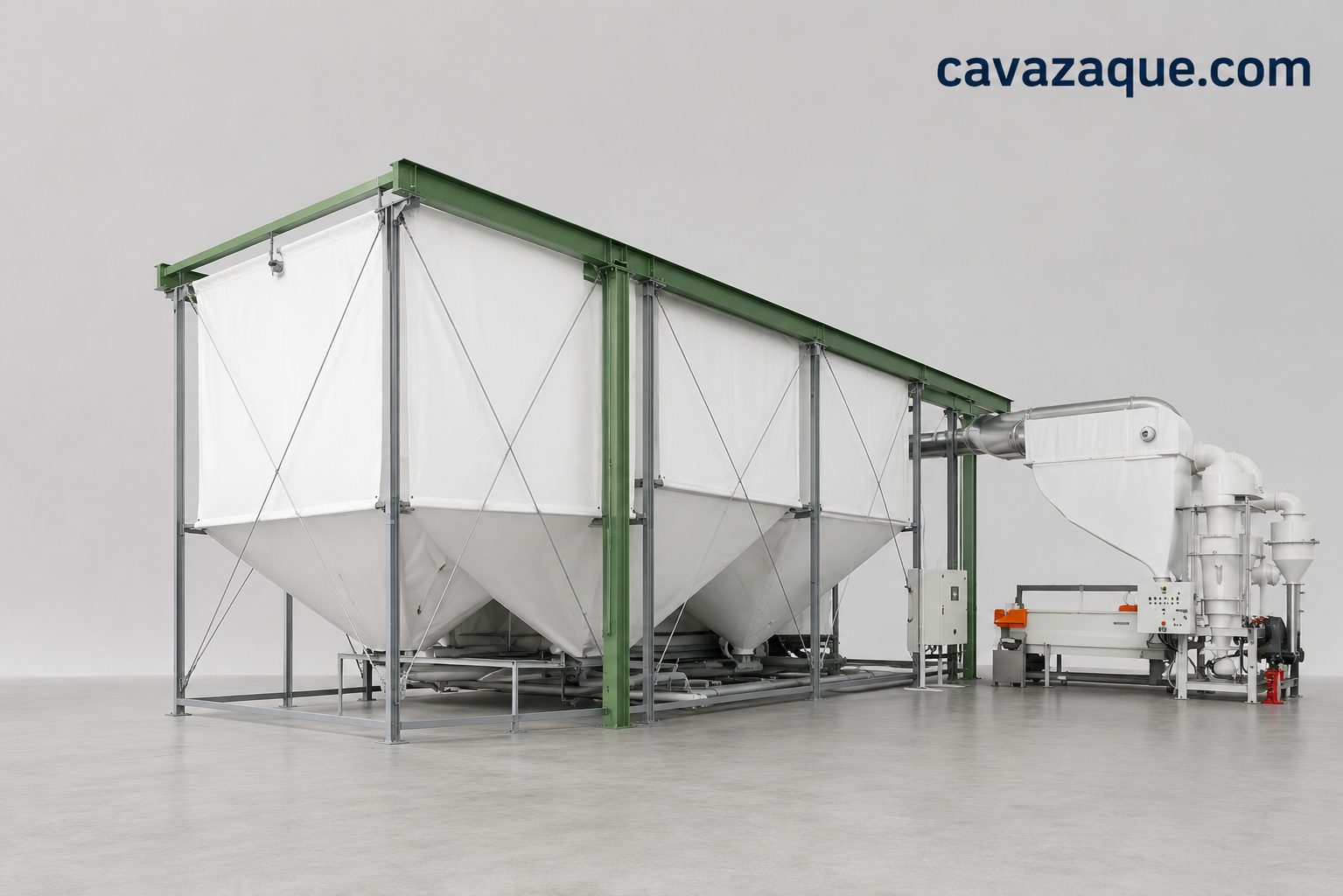
An eps silo is a specially designed storage structure used to hold expanded polystyrene materials in bulk quantities. These systems are engineered to accommodate the low-density nature of EPS while maintaining material integrity throughout storage.
Unlike conventional bins or warehouses, silos are designed for efficient loading and unloading. Many systems incorporate pneumatic conveying technology that moves EPS beads through air-powered transport lines. This minimizes manual handling and reduces the risk of contamination.
Modern silos are often integrated directly into production lines. Materials can move from pre-expansion equipment into storage and then automatically feed into molding machines when required. This seamless flow improves operational efficiency and reduces downtime.
Another distinguishing feature is scalability. Businesses can install small silos for localized operations or large storage networks capable of supporting high-volume manufacturing facilities.
How EPS Silo Systems Work
The operation of a silo system begins when EPS beads or processed materials are transported into the storage chamber. Depending on facility design, material may enter through pneumatic systems, mechanical conveyors, or specialized transfer equipment.
Once inside, the material remains protected from environmental factors. Many silo designs promote airflow and proper conditioning, which can be important for certain manufacturing processes. Material remains accessible and ready for retrieval whenever production requires it.
During unloading, automated extraction systems transfer the stored material to downstream equipment. Sensors often monitor inventory levels and help operators maintain accurate stock management.
The overall process creates a continuous cycle of storage and delivery. This reduces interruptions and helps manufacturers maintain consistent production schedules.
Key Components of an EPS Silo
Although designs vary among manufacturers, most systems share several important components.
The storage chamber forms the central structure where materials are held. This section is engineered to maximize capacity while maintaining structural stability.
Loading systems allow EPS materials to enter the silo efficiently. These may include blowers, transfer lines, or conveyor-based solutions.
Discharge mechanisms control material release. Proper discharge design ensures a consistent flow while preventing bridging or blockages.
Monitoring equipment often includes level sensors, pressure indicators, and automation controls. These technologies provide real-time operational information and support efficient inventory management.
Supporting frameworks, access platforms, and safety systems complete the installation, ensuring long-term functionality and worker protection.
Major Benefits of Using an EPS Silo
Improved Space Efficiency
One of the greatest advantages of an eps silo is its ability to maximize available space. Since EPS materials occupy large volumes, floor-based storage can quickly become impractical.
Vertical storage solutions allow businesses to use building height instead of consuming valuable production space. This often results in more organized facilities and improved operational flow.
For growing manufacturers, efficient space utilization can postpone costly facility expansions and increase overall productivity.
Better Material Protection
Watershed Meaning Explained: Definition, Importance, and Uses
EPS materials can be affected by dust, contamination, and environmental exposure. Dedicated storage systems create a protective environment that helps preserve material quality.
By reducing unnecessary handling, silos also minimize physical damage and material loss. This contributes to more consistent manufacturing outcomes and improved product quality.
Enhanced Production Continuity
Manufacturing interruptions can be costly. Storage systems help ensure that adequate material supplies remain available throughout production cycles.
Automated delivery systems provide a steady flow of material to processing equipment. As a result, production schedules become more predictable and downtime decreases.
Reduced Labor Requirements
Manual handling of lightweight bulk materials can be time-consuming and inefficient. Automated silo systems significantly reduce the need for repetitive transportation tasks.
Employees can focus on higher-value activities while automated equipment manages storage and transfer operations. This often improves overall workforce efficiency.
Industries That Depend on EPS Silo Technology
EPS storage systems serve a wide variety of industries due to the versatility of expanded polystyrene materials.
The packaging industry uses EPS extensively for protective shipping solutions. Manufacturers rely on storage systems to maintain steady material availability for molding operations.
Construction companies use EPS products for insulation panels, lightweight fill applications, and energy-efficient building systems. Large-scale storage supports continuous production of these materials.
Recycling facilities also benefit from silo technology. Reprocessed EPS materials can be stored efficiently before being reused in manufacturing processes.
Appliance manufacturers, cold-chain packaging providers, and specialty product producers frequently incorporate silo systems into their operations as well.
Comparing Different Types of EPS Silos
Different industries require different storage solutions. The ideal system depends on production volume, facility layout, environmental conditions, and budget considerations.
| Silo Type | Main Characteristics | Best Application |
|---|---|---|
| Fabric Silo | Lightweight, economical, flexible installation | Medium-volume operations |
| Steel Silo | High durability and long lifespan | Large industrial facilities |
| Aluminum Silo | Corrosion-resistant and lightweight | Specialized environments |
| Modular Silo | Expandable design | Growing businesses |
| Automated Silo System | Advanced monitoring and control | High-production facilities |
Each option offers unique strengths. Careful evaluation helps ensure the chosen solution aligns with operational goals and future growth plans.
Design Considerations When Selecting an EPS Silo
Choosing the right storage system requires a thorough understanding of current and future needs.
Capacity is often the first consideration. Organizations should estimate both present demand and anticipated growth. Undersized systems may create bottlenecks, while oversized installations can increase costs unnecessarily.
Material flow characteristics must also be evaluated. Proper design ensures smooth loading and discharge while minimizing operational disruptions.
Environmental factors such as humidity, temperature, and exposure conditions may influence construction materials and ventilation requirements.
Automation capabilities represent another important consideration. Modern systems frequently integrate with production management platforms, enabling real-time monitoring and improved operational control.
Safety requirements should never be overlooked. Access systems, emergency procedures, and maintenance provisions contribute to long-term operational reliability.
Real-World Example: Improving Manufacturing Efficiency
Consider a packaging manufacturer producing protective foam inserts for electronics. Before installing a silo system, the company stored EPS materials in multiple floor-level containers throughout the facility.
Employees spent considerable time moving materials between storage areas and production equipment. Inventory tracking was inconsistent, and production delays occurred when materials were not readily available.
After implementing a centralized EPS storage solution, material movement became automated. Storage capacity increased significantly without expanding the building footprint. Inventory visibility improved, production interruptions decreased, and overall operational efficiency increased.
This example illustrates how strategic storage investments can generate benefits that extend beyond simple material containment.
Maintenance and Operational Best Practices
Like any industrial equipment, silo systems perform best when supported by routine maintenance.
Regular inspections help identify wear, structural concerns, or airflow issues before they become serious problems. Cleaning schedules should be established to maintain material quality and system performance.
Sensor calibration is equally important. Accurate monitoring equipment supports inventory control and helps operators make informed decisions.
Training personnel on proper operating procedures further enhances system reliability. Well-trained teams can quickly identify abnormalities and respond appropriately.
Organizations that prioritize preventive maintenance often experience longer equipment lifespans and lower overall operating costs.
Sustainability and Environmental Advantages
Sustainability has become a major focus across industrial sectors. Storage technologies contribute to environmental goals in several meaningful ways.
Efficient material handling reduces waste by minimizing contamination and product loss. Better storage conditions help preserve usable material and support resource conservation.
Many recycling facilities use silo systems to manage recovered EPS materials, allowing them to be reintroduced into manufacturing processes. This supports circular production models and reduces landfill dependence.
Additionally, efficient facility layouts can reduce energy consumption associated with material transportation and handling. While these savings may seem modest individually, they can become significant across large-scale operations.
Future Trends in EPS Silo Technology
The future of industrial storage is increasingly connected, automated, and data-driven. Advanced monitoring systems now provide real-time insights into inventory levels, material movement, and operational performance.
Artificial intelligence and predictive analytics are beginning to influence maintenance planning. These technologies can identify patterns that indicate potential issues before failures occur.
Automation integration is expected to expand further, creating highly coordinated production environments where storage systems communicate directly with manufacturing equipment.
Sustainability initiatives will likely continue shaping design innovations as companies seek more efficient and environmentally responsible solutions.
As manufacturing evolves, storage infrastructure will remain a critical component of operational success, and EPS silo technology will continue adapting to meet new demands.
Conclusion
An EPS silo is far more than a storage container. It is a strategic asset that supports efficient material handling, protects valuable resources, improves production continuity, and helps organizations make better use of available space. From packaging manufacturers and construction material producers to recycling facilities and specialty product companies, silo systems play an essential role in modern industrial operations.
Understanding storage requirements, system design options, automation capabilities, and maintenance practices allows businesses to make informed decisions when selecting a solution. As technology advances and sustainability becomes increasingly important, EPS storage systems will continue evolving to deliver even greater efficiency and reliability.
Organizations that invest in well-designed storage infrastructure position themselves for smoother operations, improved productivity, and long-term growth in an increasingly competitive industrial landscape.
Frequently Asked Questions (FAQs)
1. What is an EPS silo used for?
An EPS silo is used to store expanded polystyrene materials in bulk quantities. It helps protect the material, improve organization, and support continuous manufacturing operations.
2. Why is EPS storage different from traditional storage?
EPS is extremely lightweight and occupies significant volume. Specialized storage systems are designed to handle these characteristics more efficiently than conventional storage methods.
3. Are EPS silos suitable for recycling facilities?
Yes. Recycling facilities frequently use silo systems to store recovered EPS materials before they are processed and reused in manufacturing applications.
4. How long does an EPS silo typically last?
The lifespan depends on construction quality, operating conditions, and maintenance practices. Well-maintained systems can remain operational for many years.
5. Can EPS silo systems be automated?
Absolutely. Many modern installations include automated loading, monitoring, and discharge systems that improve efficiency and reduce manual labor requirements.